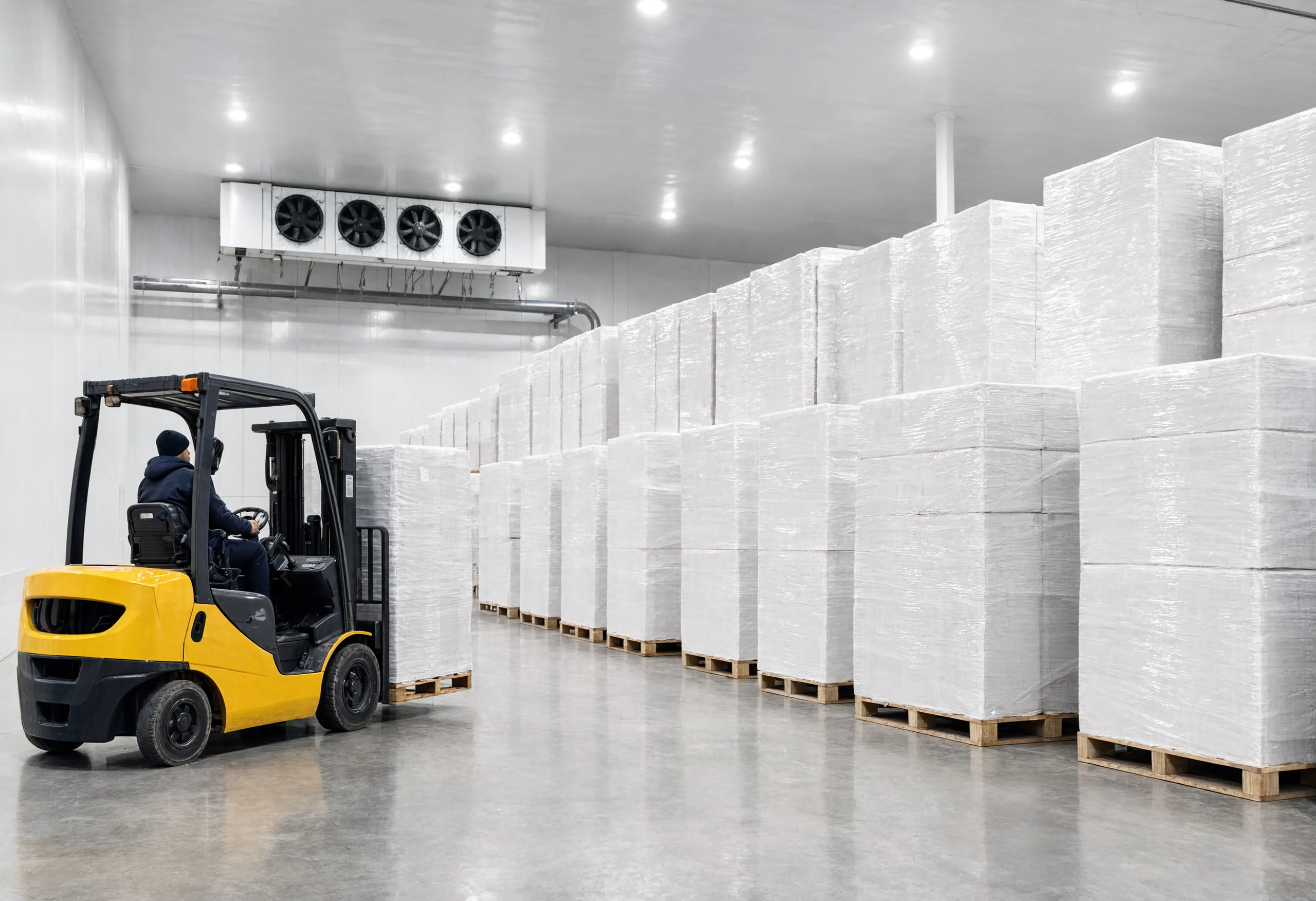
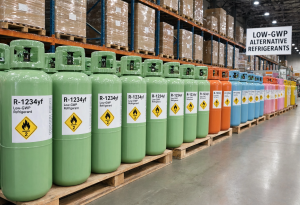
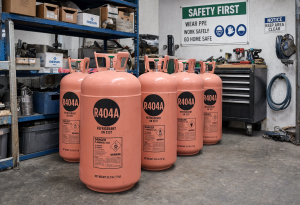
Buying refrigerant in Europe isn’t like ordering any other consumable. Under Regulation (EU) 2024/573, sellers may only supply HFCs and the HFOs listed in Annex II to certified buyers, the gas has to come in a refillable cylinder with a compliant label, and the total HFC supply allowed on the EU market in 2025-2026 is capped at just 24.3% of the 2015 baseline. This guide covers the whole purchase, from proving you’re allowed to buy to checking the cylinder on delivery.
Key Takeaways
In this guide:
- Who is legally allowed to buy refrigerant gas in the EU?
- Which refrigerant should you buy in 2026?
- Virgin, reclaimed or recycled: what’s the difference?
- What drives refrigerant prices in Europe?
- How do you spot illegal refrigerant?
- What should you check when the cylinder arrives?
- How do refillable cylinders and returns work?
- How is refrigerant shipped across Europe?
- How should B2B buyers order in bulk?
- 7-step refrigerant purchasing checklist
- Frequently Asked Questions
Who is legally allowed to buy refrigerant gas in the EU?
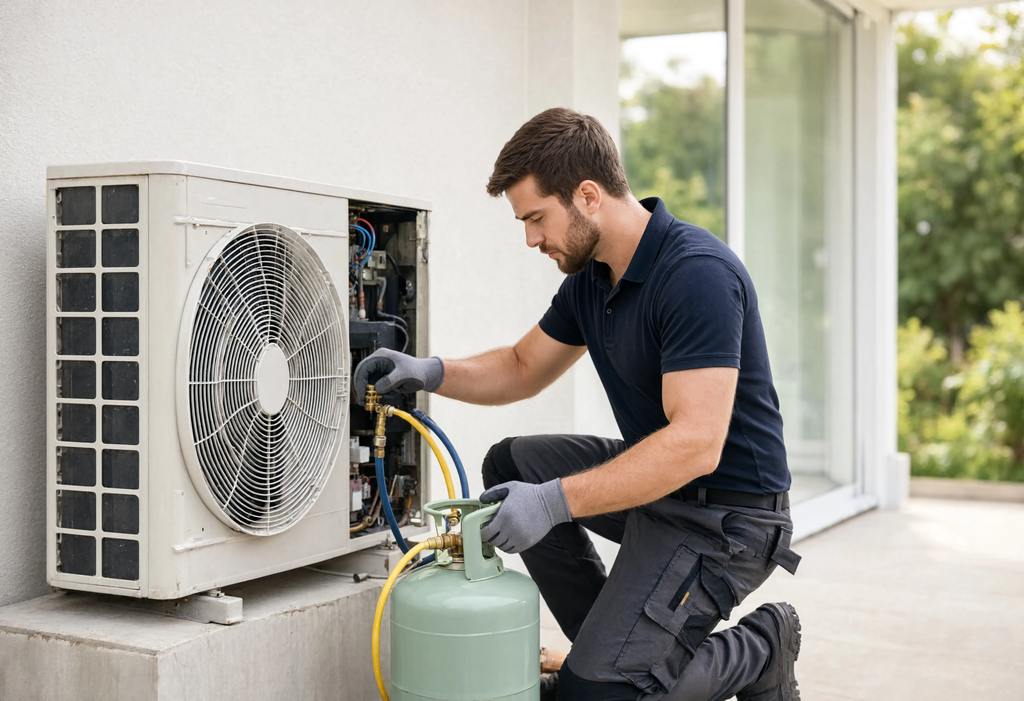
Article 11(6) of Regulation (EU) 2024/573 limits purchases of HFCs (Annex I) and HFOs such as R-1234yf and R-1234ze (Annex II, Section 1) for installation, servicing, maintenance or repair to three groups: natural persons holding an F-gas certificate, companies employing them, and holders of a training attestation for vehicle air conditioning. Sellers must sell “directly or indirectly” only to these buyers.
That second part matters more than it sounds. The legal duty sits with the seller, so a compliant supplier will ask for your certificate number before the first order, and under Article 7(3) must keep a record of that number and the quantities you bought for at least five years. If a shop never asks, it isn’t doing you a favour. It’s telling you something about where its gas comes from.
Who doesn’t need a certificate?
The same article lets non-certified companies collect, transport or deliver refrigerant, so a logistics firm or a wholesaler passing cylinders on to certified customers doesn’t need its own F-gas certificate. The European Commission’s guidance for bulk F-gas stakeholders (updated October 2025) confirms that distributors may sell exclusively to certificate holders and don’t need to register in the F-gas Portal for that activity.
Homeowners and facility managers are a different case. They can’t buy cylinders themselves, and pre-charged split systems may only be sold to an end user with evidence that a certified company will install them (Art. 11(7)). In practice, the certified installer buys the gas.
Is my certificate valid in another EU country?
Yes. Member States must recognise certificates issued elsewhere in the EU (Art. 10(9)), which is what makes cross-border buying possible. Certificates issued under the old Regulation 517/2014 stay valid, but holders need a refresher training or evaluation by 12 March 2029 and then at least every seven years (Art. 10(10)). Check the expiry and category on your certificate before you place an order. The full certification, leak-check and record-keeping process is covered in our EU F-Gas compliance guide.
Which refrigerant should you buy in 2026?
Buy the refrigerant named on the equipment nameplate, then check whether the F-Gas Regulation still allows that gas for servicing. Article 13 of Regulation 2024/573 sets servicing bans by GWP and application, and the rules differ sharply between refrigeration and air conditioning. If the label is missing or unreadable, our guide on how to identify your refrigerant type walks through the other clues.
| Equipment and gas | Virgin gas | Reclaimed / recycled gas | Typical refrigerants |
|---|---|---|---|
| Refrigeration, GWP ≥ 2,500, any charge size | Banned since 1 Jan 2025 | Allowed until 1 Jan 2030 | R-404A, R-507 |
| Air conditioning and heat pumps, GWP ≥ 2,500 | Banned from 1 Jan 2026 | Allowed until 1 Jan 2032 | R-404A or R-507 in AC use (rare) |
| Stationary refrigeration (not chillers), GWP ≥ 750 | Banned from 1 Jan 2032 | Allowed, no end date | R-407F, R-449A, R-448A, R-134a |
| Air conditioning and heat pumps, GWP below 2,500 | Allowed | Allowed | R-410A, R-32, R-407C, R-454B |
Two conclusions surprise many buyers. First, R-410A (GWP 2,088) isn’t caught by the 2026 air-conditioning ban at all, so servicing existing systems with virgin R-410A remains legal. Our article on whether R-410A is banned in the EU covers the equipment-sale rules that do apply. Second, anyone still running an R-404A cold room can only buy reclaimed gas, and that option closes in 2030. The detail is in our guide to whether R-404A is still allowed.
The buying decision a price list won’t show you: for a system that will run past 2030 on R-404A, or past 2032 on virgin R-407F, every cylinder you buy now is a bridge, not a solution. If the equipment has years of life left, compare the cost of a few more reclaimed charges against a retrofit or replacement. Our low-GWP refrigerant guide and the R-454B guide cover the main replacement candidates, while the 2026 F-Gas regulation guide explains the wider timeline.
Virgin, reclaimed or recycled: what’s the difference?
Article 3 of Regulation 2024/573 draws a hard legal line between the three. Virgin gas has never been used. Recycled gas is recovered refrigerant given basic cleaning, such as filtering and drying. Reclaimed gas is recovered refrigerant reprocessed in an authorised facility to a performance equivalent to virgin, with the quality assessed and attested.
For a buyer, the practical consequence is simple: you can only buy virgin or reclaimed gas on the open market. Recycled refrigerant may only be used by the company that carried out the recovery, or by the company for which the recovery was carried out (Art. 13(3)(b), 13(4)(b), 13(5)(b)). A cylinder advertised for sale as “recycled R-404A” is a warning sign in itself.
Reclaimed gas isn’t a cheap second-rate option either. In the Commission’s Q2/2026 monitoring, reclaimed R-404A bought by distributors cost about 96% of the most recent virgin price (European Commission, 2026). When you buy it, ask for the batch number and the name of the EU reclamation facility, both of which must appear on the label, plus a quality certificate for that batch.
What drives refrigerant prices in Europe?
Refrigerant prices in Europe are driven mainly by the HFC quota. Annex VII of Regulation 2024/573 caps HFCs placed on the EU market at 42.9 million tonnes CO₂e for 2025-2026, which is 24.3% of the 2015 baseline, falling to 12.3% in 2027 and 5.2% in 2030. Because quota is counted in CO₂e rather than kilograms, high-GWP gases use up far more of it per cylinder.
Since 1 January 2025, producers and importers also pay a fee of €3 per tonne CO₂e for their quota allocation (Art. 17(5)). That fee is a cost to the quota holder, not a line item on your invoice, and how much of it reaches the end buyer depends on the market. It still shows why a kilogram of R-404A carries almost six times the regulatory cost of a kilogram of R-32.
So how expensive has refrigerant actually become? The European Commission’s quarterly monitoring, carried out by Öko-Recherche across 54 companies in 11 Member States, found that in Q2/2026 R-134a cost 4.3 times its 2014 price for end users and 9.6 times for distributors, while R-410A sat at 3.9 and 11.3 times. World producer prices over the same period rose only about 3 and 2.3 times (European Commission, 2026).
The short-term trend is calmer than the long-term one. Between Q1 and Q2/2026, R-410A dropped 4% at producer level, while R-290 rose 11% and R-32 rose 9% as demand for lower-GWP gases grew (same source). Prices were “stable or slightly decreased” in Q4/2025, according to Cooling Post (March 2026). For cylinder-level figures on one of the most volatile gases, see our R-404A price guide for 2026.
How do you spot illegal refrigerant?
Illegal refrigerant is still widespread in Europe. OLAF’s Joint Customs Operation KHIONE, run from May to October 2024 with 16 Member States, intercepted refrigerants equal to more than 400,000 tonnes CO₂e and prevented over €4.5 million in market losses (OLAF, November 2024). Almost every illegal cylinder breaks a rule you can check yourself.
The Environmental Investigation Agency’s April 2026 report “Fakes, Fraud and F-gases”, based on undercover work in Italy, found firms admitting to falsified invoices and virgin gas mislabelled as reclaimed. It also found an Albanian distributor with no quota claiming €15 million in sales at unusually low prices (Cooling Post, April 2026). A mislabelled cylinder isn’t just a legal risk. You have no reliable idea what’s inside it.
| Red flag | Why it matters | Rule broken |
|---|---|---|
| Disposable (non-refillable) cylinder | Banned for supply and use, empty or full | Art. 11(3), Annex IV |
| Seller never asks for your certificate | A legal seller must check and record it | Art. 11(6), 7(3) |
| Label missing GWP or CO₂e, or not in the local language | Mandatory label content for every container | Art. 12(3)-(4) |
| “Reclaimed” with no batch number or facility address | Classic sign of virgin gas relabelled to dodge the ban | Art. 12(7) |
| Marked “for direct export only”, “for destruction only” or “exempted from quota” | Gas not permitted for servicing on the EU market | Art. 12(8)-(14) |
| Seller outside the EU with no EU representative | Can’t legally place bulk F-gases on the EU market | Art. 11(8) |
| Price far below the market | Often means no quota was paid for the gas | Art. 16(1) |
If you come across suspect gas, the refrigerant producers’ EFCTC Stop Illegal Cooling initiative lists reporting channels, including OLAF’s anonymous notification system and national F-gas contact points.
What should you check when the cylinder arrives?
Check the label before the cylinder goes anywhere near a system. Since 1 January 2025, Article 12(3) of Regulation 2024/573 requires every F-gas container to show that it contains fluorinated greenhouse gases, the industry designation or chemical name, and the quantity both in kilograms and in tonnes CO₂e, together with the GWP.
- Language: the label must be legible, indelible and in the official language of the Member State where the gas is sold (Art. 12(4)). A cylinder shipped to Austria with an Italian-only label doesn’t meet this rule.
- Reclaimed gas: it must be marked as reclaimed and show the batch number plus the name and address of the EU reclamation facility (Art. 12(7)).
- Refilled cylinders: they must carry an updated label (Art. 12(6)).
- Weight: weigh the cylinder on receipt and compare the gross weight with the tare stamped on the collar. It takes a minute and settles any dispute about short fills.
- Paperwork: keep the delivery note, invoice and any batch certificate with your records. You’ll need the quantities for your own intervention records.
Not every non-compliant delivery is fraud. A missing batch number on a reclaimed cylinder, or a label in the wrong language after a cross-border order, can be a simple supplier error. Both are grounds to refuse the delivery and ask the supplier for a compliant replacement. For a worked, gas-specific example of these checks, read our guide on how to buy R-404A legally.
How do refillable cylinders and returns work?
All refrigerant for servicing must come in refillable containers. Under Article 11(3) of Regulation 2024/573, a cylinder that could technically be refilled still counts as non-refillable if it was placed on the market without any arrangement for its return. Whoever places refillable containers on the market must issue a declaration of conformity setting out binding return arrangements, and keep it for five years (Art. 11(4)).
The regulation doesn’t set an EU-wide deposit amount, so deposits and return fees are a commercial matter between you and your supplier. Before ordering, ask three questions: is there a deposit or cylinder rental charge, how and where are empties returned, and is there a time limit before the deposit is forfeited? Empty cylinders tied up in a van for months are money you’ve already paid.
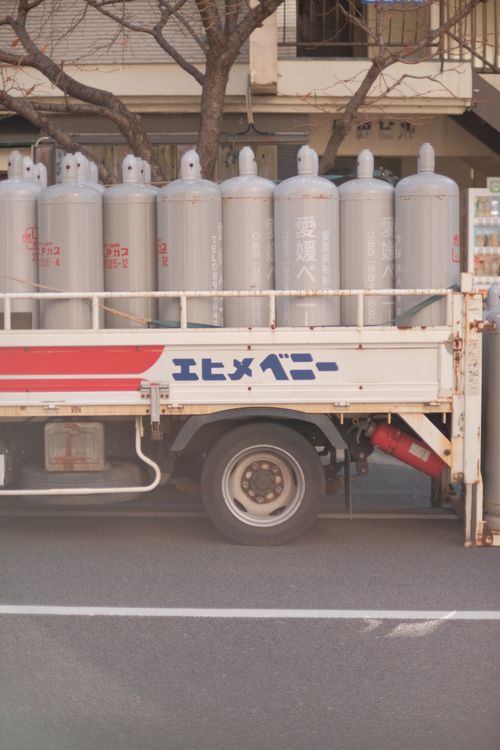
How is refrigerant shipped across Europe?
Refrigerant cylinders are Class 2 dangerous goods under the UNECE ADR agreement, so road carriers need the right documentation, labelling and training. Non-flammable blends such as R-410A travel under label 2.2, while R-32 is classified UN 3252 with label 2.1 because it’s flammable (Daikin HFC-32 safety data sheet). Section 14 of each product’s SDS gives the exact UN number.
Technicians collecting their own cylinders can often use the ADR 1.1.3.6 small-load exemption. Per transport unit, the threshold is 1,000 units for transport category 3 and 333 for category 2, and drivers still need basic awareness training, a 2 kg dry powder extinguisher and secure stowage (ADR 1.1.3.6, summarised in HSE guidance on ADR exemptions). Check the transport category on the SDS before you load a van, because the category, and therefore the limit, differs from one gas to another.
What changes outside the EU?
Shipping refrigerant out of the EU customs territory counts as an export and needs an F-gas Portal licence regardless of quantity (Umweltbundesamt). Buyers in three neighbouring markets face their own rules:
- Switzerland: refrigerants fall under ChemRRV Annex 2.10, handling them requires a special permit, and stricter rules apply from 1 January 2027 (BAFU, 2025).
- Norway: on top of its F-gas rules, an HFC excise tax of NOK 1.639 per kg multiplied by the gas’s GWP applies in 2026 (Lovdata), which makes high-GWP gases especially expensive there.
- United Kingdom: Great Britain runs a separate quota system, while Northern Ireland stays under EU F-gas law, so movements between the two need registration under both (GOV.UK).
How should B2B buyers order in bulk?
Buying in bulk makes sense when your consumption is predictable, but the compliance duties scale with the order. A wholesaler reselling to other companies may do so without its own certificate (Art. 11(6)), yet it must still sell only to certified end buyers and keep records of their certificate numbers and quantities for five years (Art. 7(3) of Regulation 2024/573).
- Match stock to the ban calendar. Don’t bulk-buy gases that lose their servicing market soon: reclaimed R-404A only has until 2030, and R-507 falls under the same rules.
- Standardise cylinder sizes. Bundles of identical cylinders simplify weighing, labelling checks and deposit tracking.
- Agree documentation up front. Ask for batch certificates for reclaimed gas and a copy of the supplier’s return arrangement declaration (Art. 11(4)).
- Plan storage and transport. Larger loads change your ADR position when you transport them, and larger stocks may trigger local rules on storing pressurised gases.
- Watch the quota steps. The drop from 24.3% to 12.3% of baseline in 2027 is the next structural supply squeeze, and the EU HFC phase-down timeline shows the full schedule.
Commercial refrigeration buyers have one more thing to plan for. From 2032, virgin gases with GWP ≥ 750, including R-407F and R-449A, can no longer be used to service stationary refrigeration (Art. 13(5)), though reclaimed supplies stay allowed. If R-407F is your workhorse gas, our complete R-407F guide covers properties, uses and buying.
7-step refrigerant purchasing checklist
Every legal refrigerant purchase in the EU follows the same sequence. Work through these seven steps before each new supplier or new gas, and most compliance problems never reach your workshop.
- Confirm your certificate. Check the category and expiry date, and have the number ready for the seller.
- Identify the gas. Read the nameplate, and verify the refrigerant type if the label is missing. On R-410A systems, the R-410A pressure-temperature chart helps confirm what’s in the circuit.
- Check the servicing rules. Decide whether virgin gas is allowed or only reclaimed (Art. 13).
- Vet the supplier. A legal seller is EU-established or acts through an EU representative, asks for your certificate and only offers refillable cylinders.
- Agree cylinder terms. Clarify the deposit, return logistics and batch certificates before paying.
- Arrange transport. Use ADR-compliant carriers, or check the 1.1.3.6 limits if you collect the cylinders yourself.
- Inspect on delivery. Check the label (Art. 12), weigh the cylinder and file the paperwork with your records.
Frequently Asked Questions
Can I buy refrigerant gas without an F-gas certificate in the EU?
Not for installation, servicing, maintenance or repair. Article 11(6) of Regulation (EU) 2024/573 lets sellers supply HFCs and the HFOs listed in Annex II only to certified people, companies employing them, or holders of a vehicle air-conditioning training attestation. Companies that only collect, transport or deliver the gas are exempt. See our <a href="https://refrigerationstore.eu/gas/eu-f-gas-compliance-2026-certification-leak-checks-record-keeping/">EU F-Gas compliance guide</a>.
Can I use my F-gas certificate to buy refrigerant in another EU country?
Yes. Article 10(9) of Regulation 2024/573 requires Member States to recognise certificates issued in other Member States. Certificates issued under the old Regulation 517/2014 remain valid, but holders need refresher training or evaluation by 12 March 2029.
Are disposable refrigerant cylinders legal in Europe?
No. Non-refillable containers for HFCs and the HFOs listed in Annex II are banned for import, supply and use under Article 11(3) and Annex IV of Regulation 2024/573. A cylinder also counts as non-refillable if it was sold without any arrangement for its return.
Is reclaimed refrigerant as good as virgin gas?
Reclaimed gas is legally defined as refrigerant reprocessed in an authorised facility to a performance equivalent to virgin gas (Article 3). Its label must show a batch number and the name and address of the EU reclamation facility. Recycled gas is different: only the company that carried out the recovery, or the company it was carried out for, may use it.
Why is refrigerant so expensive in Europe?
The EU HFC quota for 2025-2026 is capped at 24.3% of the 2015 baseline and drops to 12.3% in 2027. Producers and importers also pay a €3 per tonne CO2e quota fee. In Q2/2026, European Commission monitoring put R-410A distributor prices at 11.3 times their 2014 level. See our <a href="https://refrigerationstore.eu/gas/r404a-price-2026-cost-availability-eu-regulation/">R-404A price guide</a> for cylinder-level figures.
Can I still buy R-410A in 2026?
Yes. R-410A has a GWP of 2,088, below the 2,500 threshold of the Article 13(4) servicing ban for air conditioning and heat pumps, so virgin R-410A can still be bought and used to service existing systems. Restrictions apply to placing some new equipment on the market. Details in our <a href="https://refrigerationstore.eu/gas/is-r-410a-banned-eu-2026/">R-410A ban guide</a>.
Buying refrigerant legally is mostly about asking the right questions
A legal refrigerant purchase in Europe comes down to four checks. You’re certified, the gas is still allowed for your application, the cylinder is refillable and properly labelled, and the seller asks who you are. Prices will stay under pressure as the quota falls to 12.3% of baseline in 2027, which makes choosing the right gas, and a replacement plan for high-GWP systems, as important as finding the best price per cylinder.
For gas-specific detail, start with buying R-404A legally, the R-404A price guide and our 2026 F-Gas regulation overview. When you’re ready to order, browse the refrigerant range with delivery across Europe.
Disclaimer: this guide summarises Regulation (EU) 2024/573 and related rules as of September 2026 for general information. It isn’t legal advice. National implementation, penalties and transport requirements vary, so check your national F-gas authority, the product safety data sheet and your carrier before buying or shipping refrigerant. Spotted an error or an outdated rule? Let our team know. Price figures are indices from European Commission monitoring and change quarterly.